
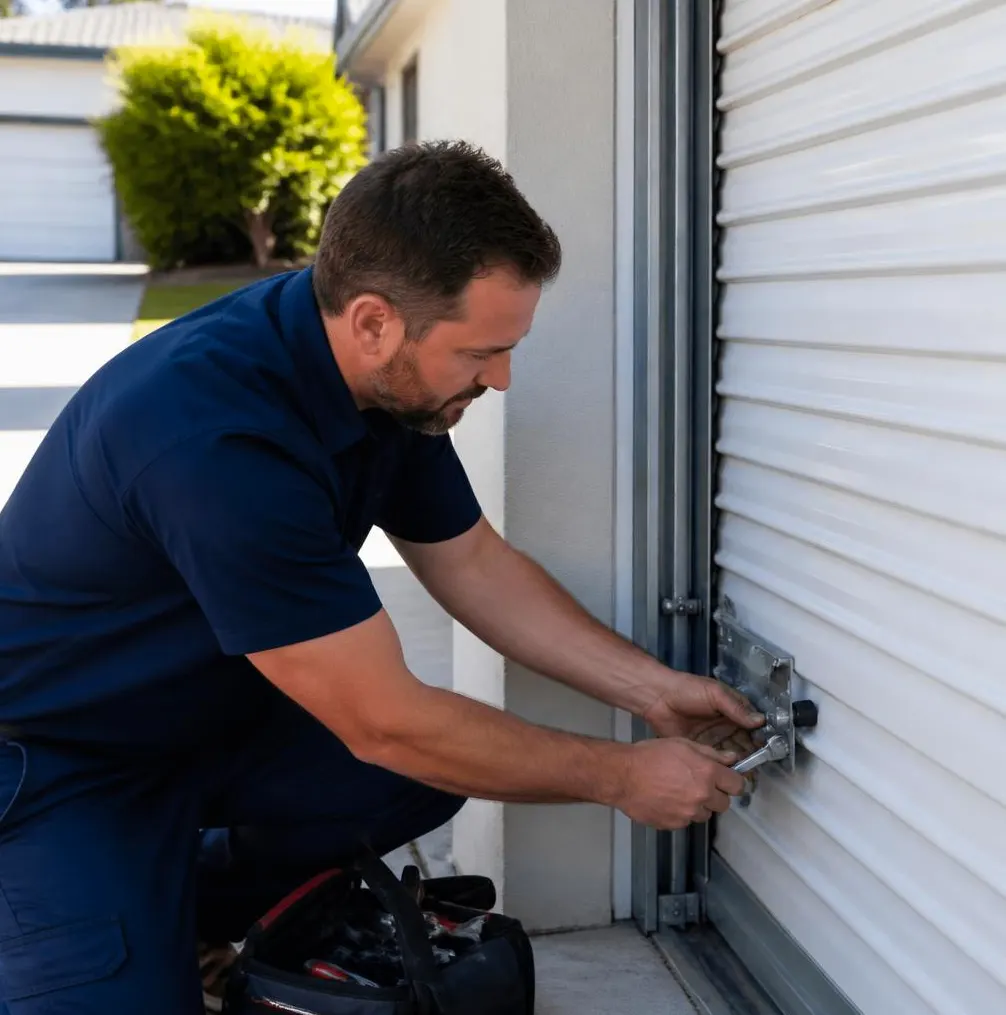
What the Technician Usually Finds
The call usually starts the same way: a homeowner in Mims or Port St. John built a detached metal workshop, bought a used roll-up or sectional commercial door for it, and hooked up whatever opener was sitting in the garage. Six months later the door is dragging, the opener smells hot, or the springs snapped on a door that's barely a year old. One spouse insists it's "just a bigger garage door" and should be treated the same as the one on the house. The other spouse is pretty sure something is actually wrong. Usually, they're both a little right — it is the same basic idea, but a commercial-grade door is built and used differently enough that it needs its own plan.
Construction Is Heavier-Duty On Purpose
Residential garage doors are built for a door that opens a handful of times a day and gets replaced or upgraded every decade or two along with the rest of the house. Commercial and warehouse doors are built assuming near-constant use: thicker steel gauge, reinforced struts, heavier-duty tracks and rollers, and springs rated for tens of thousands of cycles instead of thousands. That's why a commercial door salvaged for a home workshop can actually outlast the opener and hardware paired with it — the door itself was engineered for a harder life than it's getting, but the opener and springs attached to it often weren't matched to the door's actual weight and size.
Openers Are Not Interchangeable
This is where most of the trouble starts. A standard residential chain-drive or belt-drive opener is an intermittent-duty motor — it's designed to run in short bursts and rest in between. Commercial operators, including jackshaft-style units mounted beside the door rather than overhead, are continuous-duty and built to handle frequent cycling and heavier doors without overheating. Put a residential opener on a commercial-weight door and you'll usually see it struggle, run hot, or burn out well before it should. If you're setting up a shop, detached garage, or pole barn with a heavier door, the opener needs to be sized to the door's weight and expected use, not just whatever was cheapest or already on hand.
Maintenance Schedules Should Differ Too
A house door gets opened and closed a few times a day; a shop or warehouse door might cycle dozens of times if it's in regular use for vehicles, equipment, or deliveries. More cycles means springs, cables, rollers, and hinges wear out faster — which is exactly why commercial doors are rated for higher cycle counts in the first place, but it also means they need more frequent inspection, not less. A reasonable rule of thumb: if a door is used far more than a typical household door, it should be checked more often than once a year, with particular attention to spring tension, track alignment, and photo-eye sensors if the door reverses when anything crosses its path.
Wind Load and Salt Air Don't Care Which Door It Is
Whether it's the door on the house or the door on a metal building out back, anything installed here needs to hold up to wind-load requirements and the salt-laden, humid air common near the coast and along the Indian River. Steel components on commercial doors are often galvanized, but exposed hardware, hinges, and springs can still start showing surface rust faster in salt air, especially on properties closer to Merritt Island, Cocoa Beach, or Cape Canaveral. Humidity also swells wood-paneled doors and can warp tracks mounted without proper clearance. None of that changes because a door is labeled "commercial" — it just means there's more door, more hardware, and more cycles for the weather to work on.
When To Call Titusville Overhead Door Co
If you've got a workshop, detached garage, or small commercial space with a door that's cycling hard, running hot, or just doesn't feel matched to its opener, that's worth a look before it fails outright. We handle garage door opener installation sized correctly to the door's weight and use, along with preventive maintenance scheduled to match how often the door actually runs rather than a generic once-a-year visit. We also handle the usual spring, cable, and off-track repairs on both house doors and heavier-duty setups.
If you're in Titusville, Mims, Port St. John, Cocoa, Rockledge, Merritt Island, Cape Canaveral, or Cocoa Beach and need a second opinion on a shop or warehouse door — or just want to settle the argument for good — give Titusville Overhead Door Co a call.