
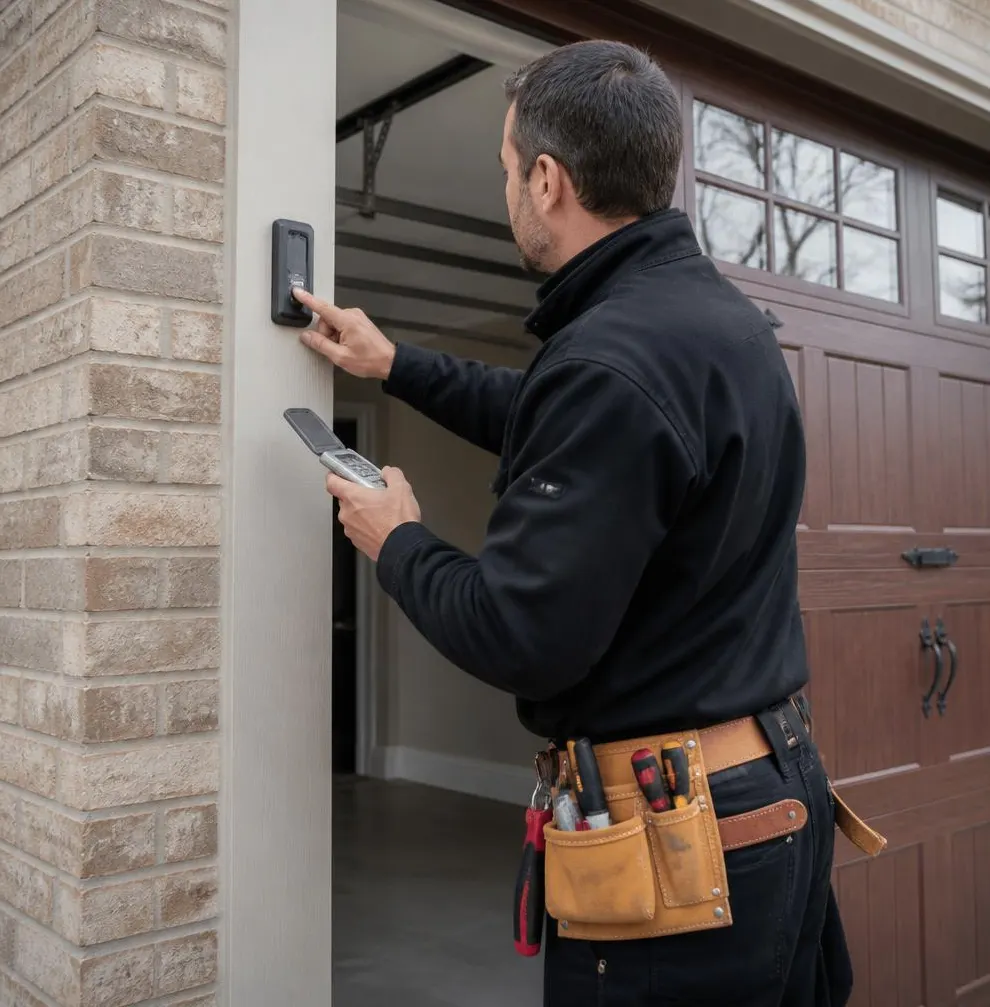
The first thing most Titusville homeowners do when they think about "winterizing" the garage door is grab a can of WD-40 and spray every moving part until it stops squeaking. It's quick, it's cheap, and the quiet door that rolls out afterward feels like a job well done. The problem is that WD-40 is a solvent, not a lubricant — it strips old grease off rollers and hinges, attracts dust and salt-laden grit, and does nothing for the parts that actually fail: springs, cables, and worn rollers. Spraying first and inspecting never is how small issues turn into a snapped spring in January.
Here's a better order of operations for the season actually heading our way.
What's Different About Winter on the Space Coast
Titusville doesn't get freezing temperatures, but the season does bring real changes that affect a garage door. Humidity drops, afternoon downpours taper off, and nights get cool enough that wood panels and door seams contract after months of swelling in the heat. That contraction is actually useful — it's the best window all year to spot gaps, warps, and rust that were hidden by summer swelling. Salt air off the coast doesn't take a season off, though, so corrosion checks still matter in Cocoa Beach, Cape Canaveral, and Merritt Island homes just as much as they did in July.
Step 1: Check for Damage Hurricane Season Left Behind
Before you lubricate anything, walk the door with a flashlight and look for what the last few months did to it:
- Rust spots on hinges, track brackets, and the bottom of the door panels, especially if you're closer to Cocoa Beach, Cape Canaveral, or Merritt Island.
- Track misalignment from wind-driven pressure during storms — look for gaps between the rollers and track, or a track that's pulled slightly away from the wall.
- Swollen or warped panels on older wood or composite doors that soaked up humidity all summer and haven't fully dried out yet.
- Cracked or brittle weatherstripping along the bottom seal and sides, which lets water in during storms and pests in during cooler months.
Any of these are easier to catch now, while the door is drying out and shrinking back to its normal shape, than in the middle of August when everything's swollen tight.
Step 2: Lubricate the Right Parts With the Right Product
Skip the WD-40 and use a silicone-based garage door lubricant instead. Apply it to:
- Roller bearings (not the track itself)
- Hinges where panels connect
- The top bar and arm bars on the opener
- Lock mechanisms, if your door has one
Don't lubricate the springs themselves — they need a specific lubricant, and uneven tension from DIY spring work is one of the more common ways people get hurt. If your springs look rusty, rough, or have visible gaps when the door is down, that's a job to call in, not spray and hope.
Step 3: Reseal and Re-check the Bottom
Cooler, drier air makes this the easiest time of year to get an accurate read on your bottom seal. Close the door on a sunny day and look for daylight coming through underneath — any visible light means the seal has shrunk, cracked, or come loose. A worn seal lets in cooler night air, dust, and small pests looking for a dry place to settle in for the season. Replacing a bottom seal is inexpensive and one of the few garage door repairs most homeowners can do themselves with basic tools.
Step 4: Test the Opener and Safety Sensors
Hurricane season just wrapped up, and a lot of openers took vibration, power flickers, or minor water intrusion they never got checked after. Run through this short test:
- Wave something in front of the photo-eye sensors while the door is closing — it should reverse immediately.
- Check that the sensors are still aligned (a small nudge during a storm can knock them off).
- Test the manual release handle so you know it still works if the power goes out.
- If your opener has a battery backup, check that it still holds a charge.
None of this is winter-specific weather protection, but late fall through winter is when people tend to forget storm habits were ever a daily concern — and that's exactly when a sensor that's been slightly off since September finally causes a problem.
Step 5: Tighten Hardware and Recheck Wind-Load Fasteners
Vibration from months of opening and closing, plus any storm activity, loosens bolts on the track brackets and hinges over time. Go around with a wrench and snug anything that's loose. If your door has reinforcement struts or hurricane-rated hardware, confirm nothing shifted or cracked — this is hardware you want fully seated before the next storm season, not scrambling to fix during one.
When to Call Titusville Overhead Door Co
If you find rust on the springs, a track that's visibly pulled away from the wall, or a door that's noticeably heavier or harder to lift than it used to be, stop and call us instead of pushing through it. We handle garage door spring repair and off track door repair regularly for homes throughout Titusville, Port St. John, Mims, Cocoa, Rockledge, Merritt Island, Cape Canaveral, and Cocoa Beach, and we can tell quickly whether you're looking at an adjustment or a part that needs replacing before it fails on you. A quick preventive maintenance visit now also catches the small stuff — loose rollers, worn cables, minor misalignment — before it becomes a weekend without a working garage door.
If your door's been fighting you since hurricane season, give Titusville Overhead Door Co a call and we'll get it running smoothly before winter settles in on the Space Coast.